Meet Polyboroides typus typus
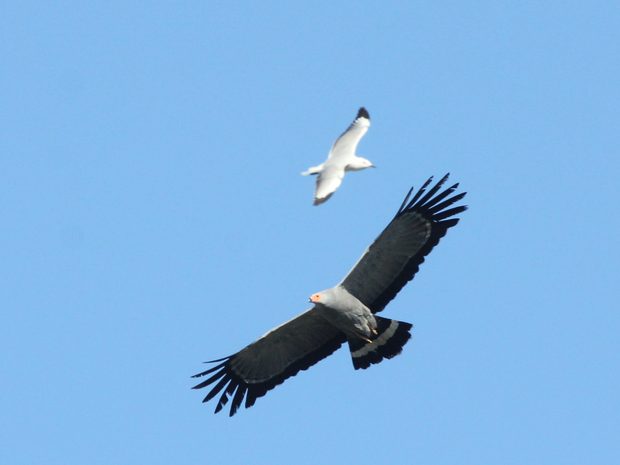
The African Harrier-Hawk is a medium-large grey raptor with broad wings, a long tail carrying one white band, and a small head on a long neck.
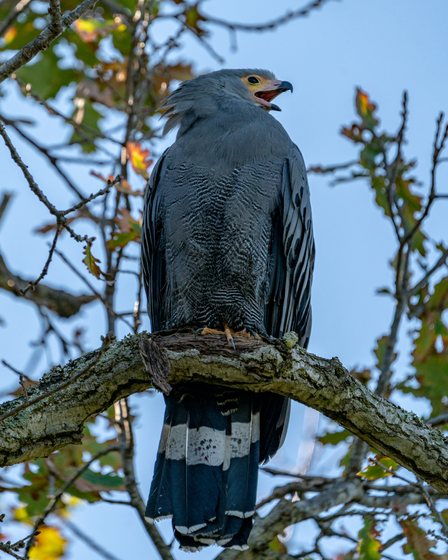
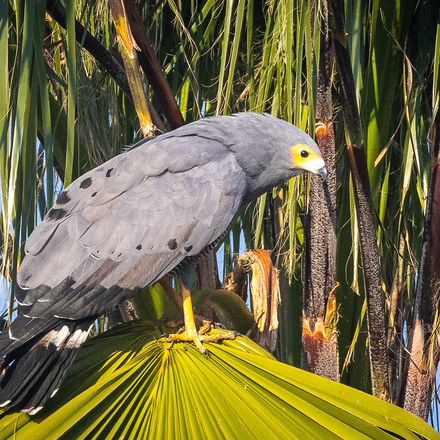
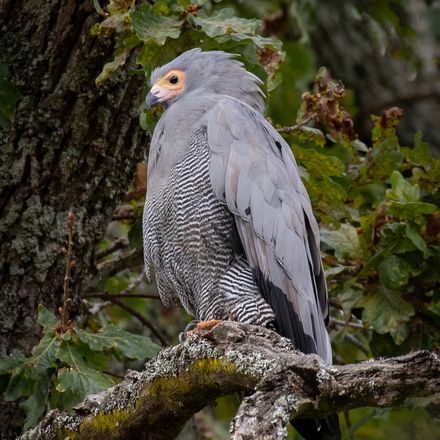
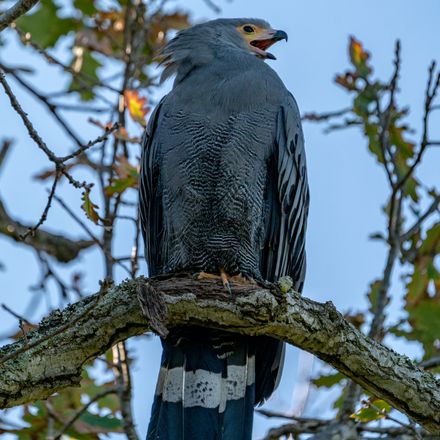
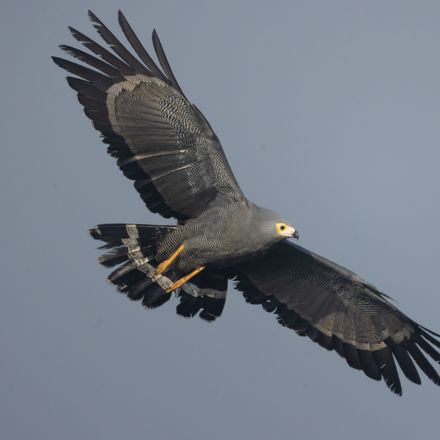
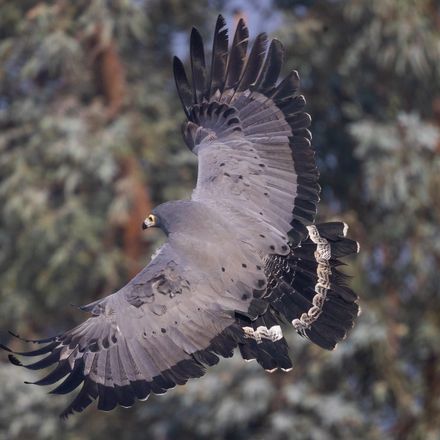
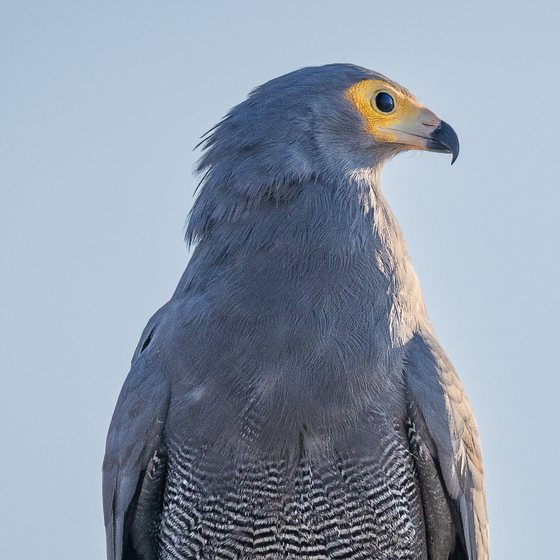
Adults and young look quite different! Adults are pale ash-grey above with a finely barred black-and-white belly, yellow legs, and a patch of bare skin on the face. That bare patch gives the bird its other name. Gymnogene means something close to "naked cheek".
In the air they look loose and unhurried, drifting low along tree lines rather than circling high like a buzzard. They occur across most of sub-Saharan Africa in woodland and forest edge, and in Cape Town they are resident year-round and often spotted on buildings and in gardens.
Telling the ages apart
An African Harrier-Hawk takes about three years to reach full adult plumage, and the stages look different enough that they are often reported as separate species. Immatures are the trickiest to identify.
Adult
Around three years and older- Ash-grey head, back and wings
- Belly and thighs finely barred black and white
- Black tail with one broad white band
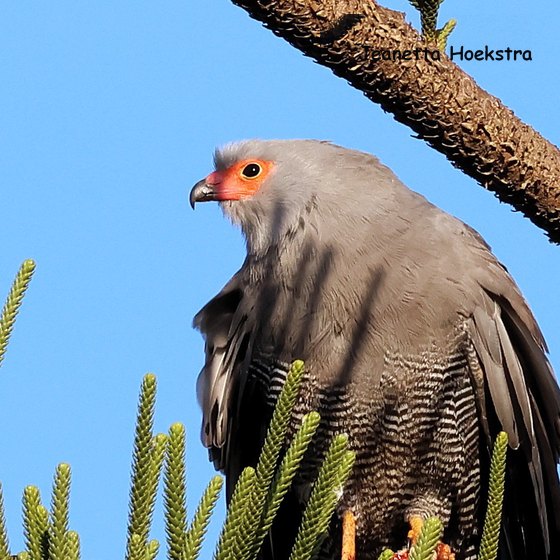
- Bare yellow face that flushes pink or red on occasion
- Bright yellow legs
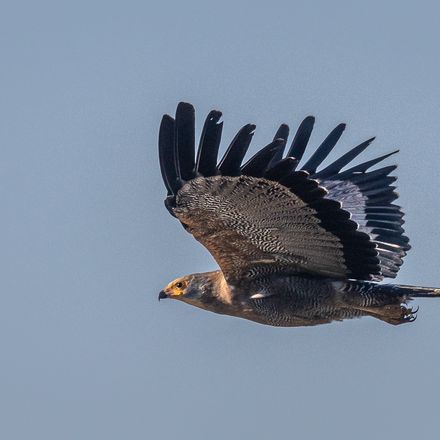
Immature
Roughly one to three years- Grey coming through the brown, usually in patches
- Barring on the belly started but incomplete
- Tail band there but duller, sometimes extra bars
- Face dull yellow, rarely flushing
- Often mistaken for an adult at a distance
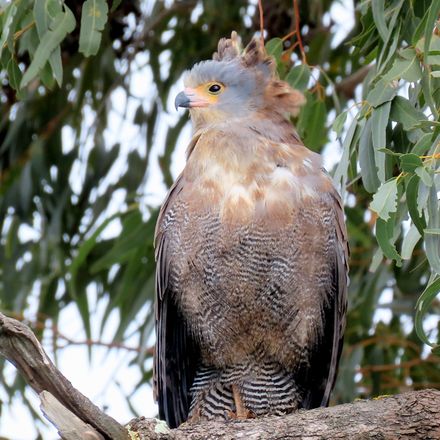
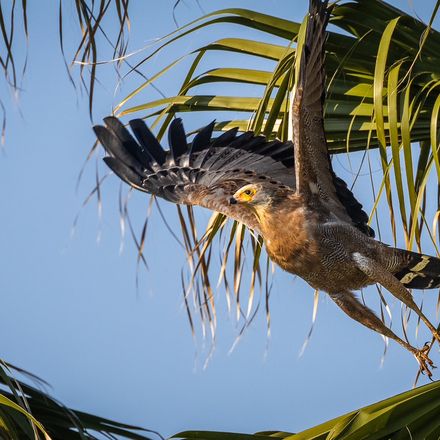
Juvenile
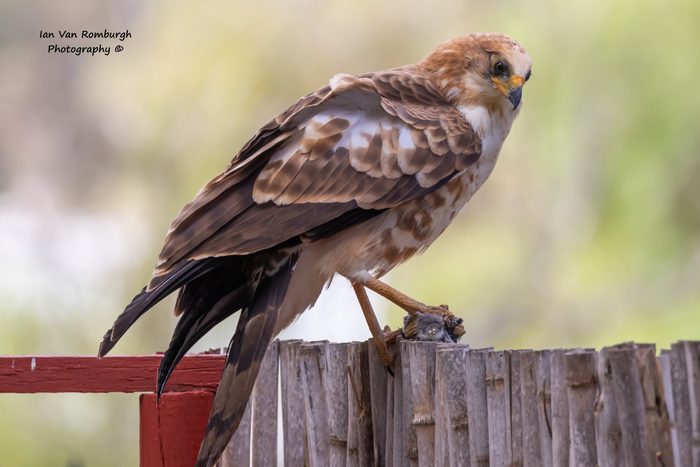
First year- Variably coloured, from light buff to rufous/dark brown
- Underparts streaked and untidy looking
- Face dull greenish-yellow
- Same small head, long neck, broad wings and loose flight
- Sometimes mistaken for an eagle or a buzzard
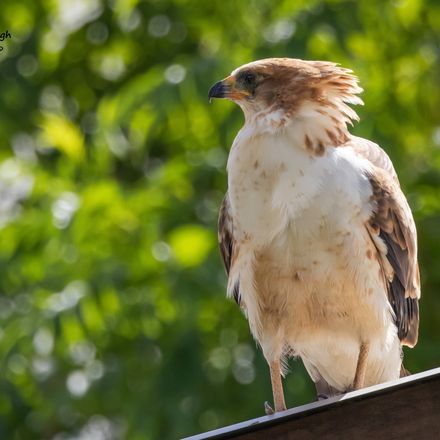
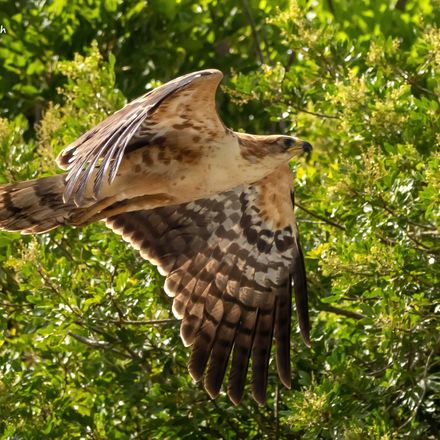
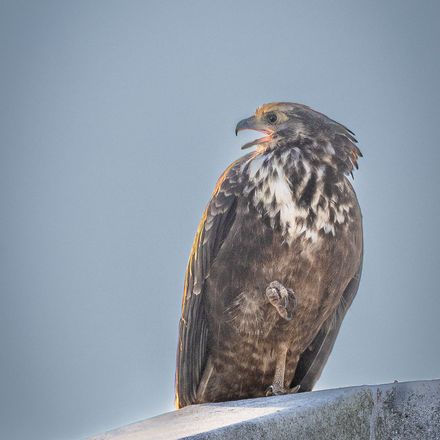
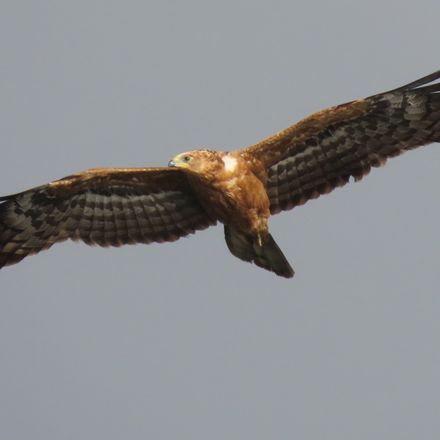
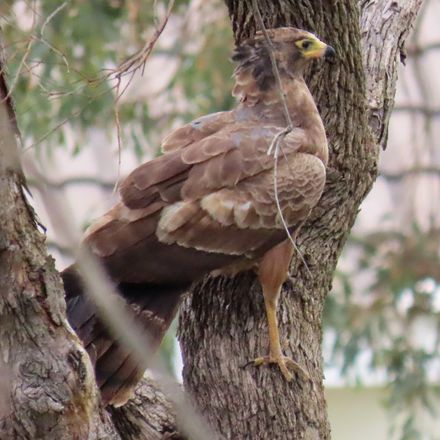
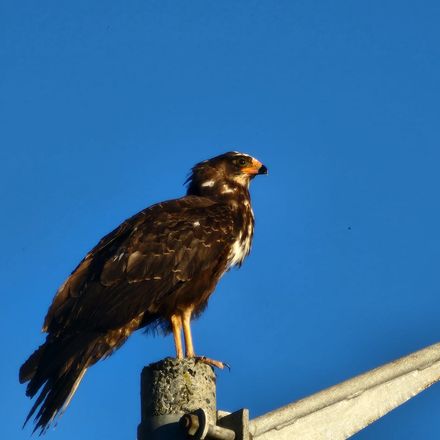
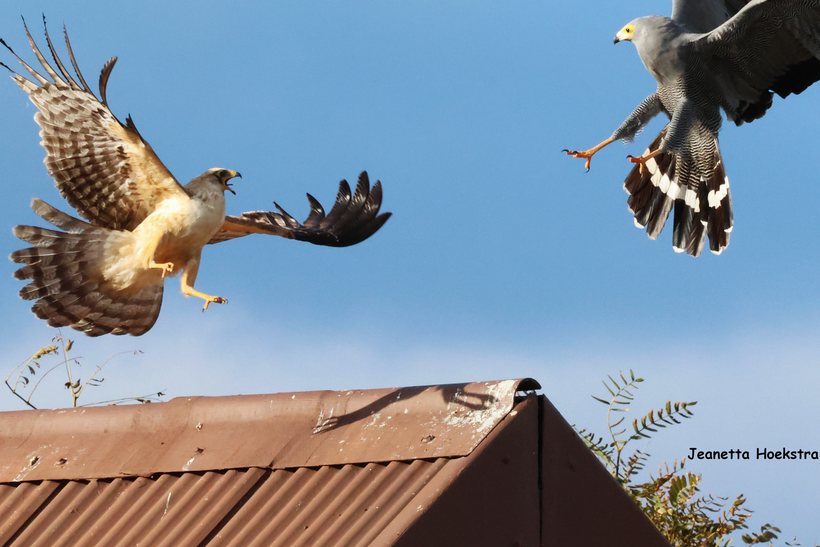
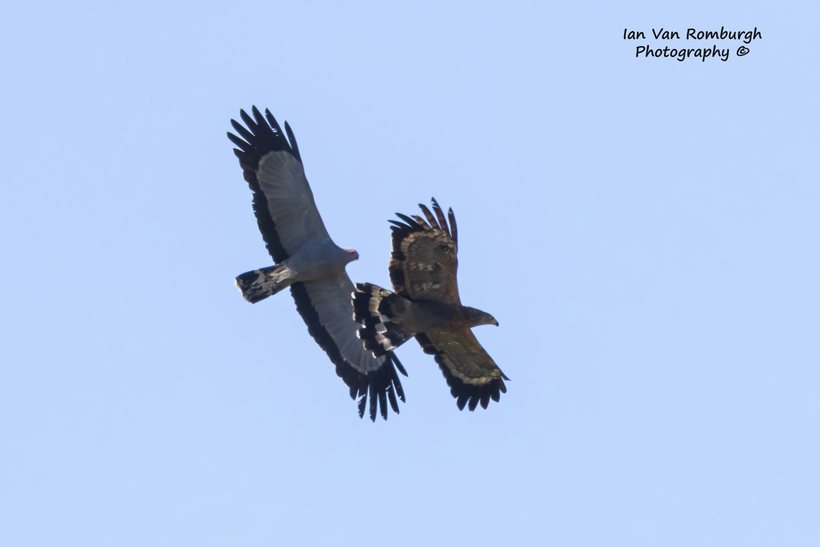
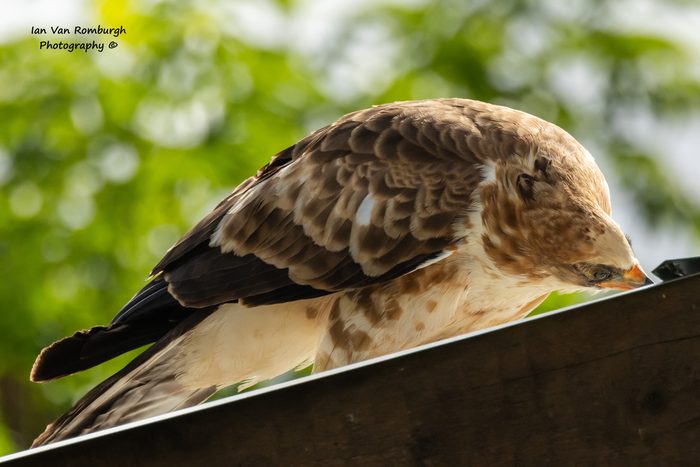
Contrasting the plumage of the adult and juvenile African Harrier-Hawk.
What makes it unusual
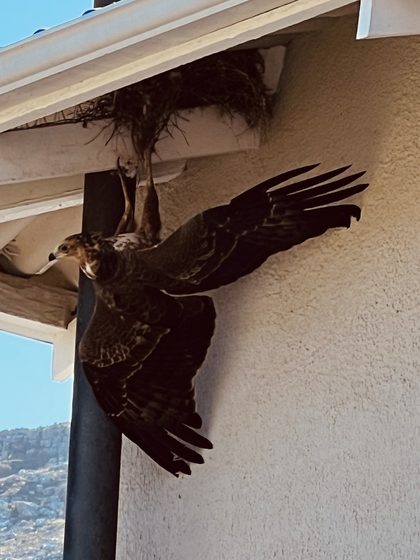
Its legs bend both ways
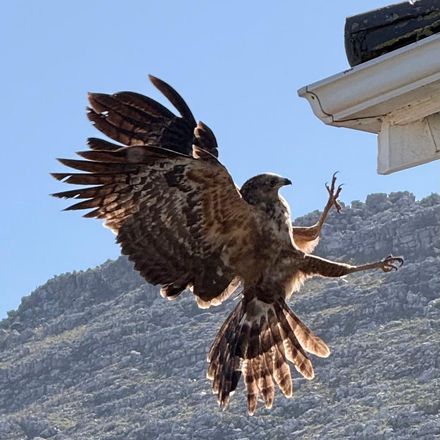
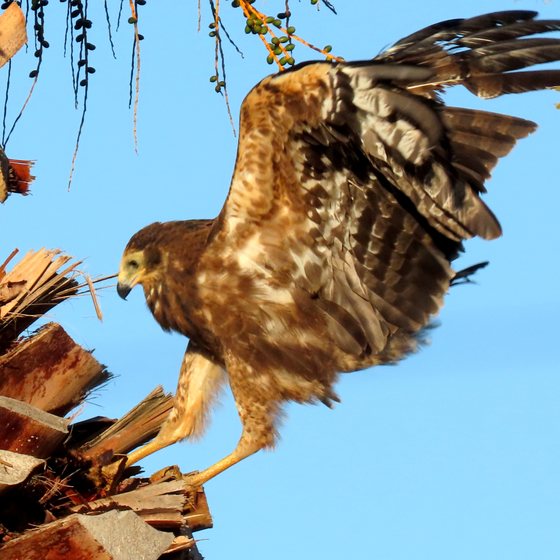
The African Harrier-Hawk has one of the rarest anatomical adaptations in the raptor world! The joint that works as the bird's ankle flexes backwards as well as forwards, through about 190 to 205 degrees. Almost no other bird can do this. It exists so the bird can push a long leg into a tree hollow or a weaver nest, bend it round a corner, and hook out whatever is inside.
Just one other bird has arrived at the same solution
The Crane Hawk of Central and South America has an almost identical joint and the same cavity-raiding habit. The two are not closely related and live on different continents. Yet same answer to the same problem.
It climbs
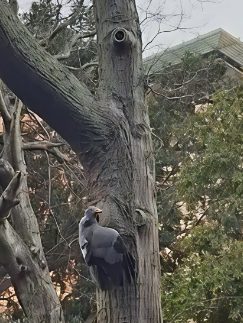
African Harrier-Hawks work their way along trunks, cliffs and walls using their wings for balance, hanging sideways and upside down while they feel about for prey. In the suburbs that means palm crowns, roof spaces, eaves and garden walls as much as trees.
Four ways of hunting
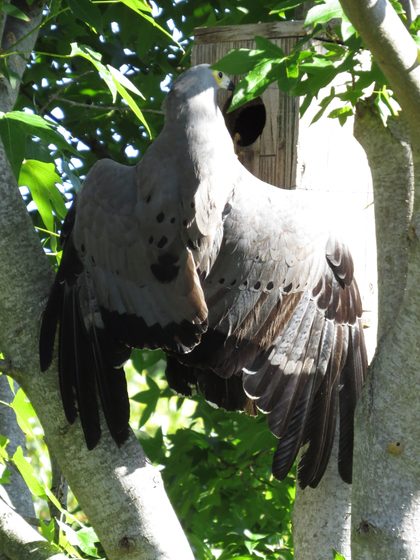
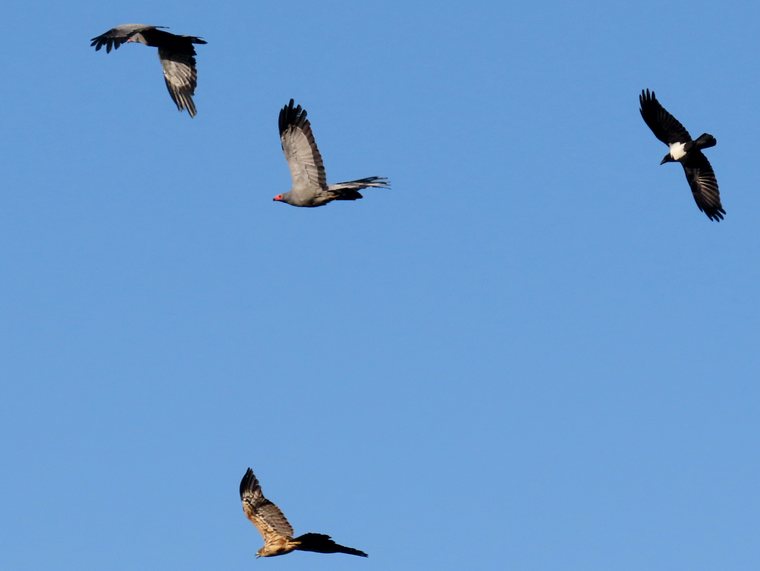
Low soaring just above the canopy is the usual method, and the one that gets it mobbed. The others are high soaring, hunting from a perch, and working through the canopy or along the ground. The Harrier-Hawk is a clever bird - it appears to read the intensity of mobbing to locate active nests, turning back when the small birds lose interest.
The face changes colour
The bare skin is normally soft yellow and flushes through orange to pink or red when the bird is excited, displaying or aggravated. It is a useful cue in the field. A flushed face often means something is up.
Usually one chick survives
The female lays one to three eggs and sits for about 35 days while the male hunts. Where two hatch, the older often kills the younger. Whether the food supply in a city changes that outcome is a question we hope this study can settle.
Every small bird in the area hates it
Because it specialises in robbing nests, it gets mobbed by weavers, bulbuls, starlings, crows and drongos. A sudden burst of alarm calls is often the first sign one is about. If you hear it, look up.
Giveaway behaviours
Plumage is not the only means to identify the African Harrier-Hawk, especially with the variability of the juvenile plumage! Habits that help identify the bird include:
In the air
- Drifting slowly and low along a tree line
- Long legs left dangling
- Extended wings with loose, floppy wingbeats
- A mixed flock of small birds going up around it
In a tree
- Clambering about a trunk or through a canopy
- Hanging upside down at a nest or hole
- Working a palm crown or a weaver colony
- Sitting quietly in the same tree
Often confused with
- Black Sparrowhawk: darker, faster, direct flight
- Jackal Buzzard: rufous chest, no white tail band
The wider picture
The species is listed as Least Concern, and on paper its population is stable. However recent work shows that the African Harrier-Hawk is showing sharp declines outside of protected areas. Habitat converted to farmland, poisoning and persecution are the main causes.
That is what makes Cape Town interesting. A bird under pressure across much of its range appears to be holding its own, or gaining, in a city as big as Cape Town. Working out what the city offers, and how the bird adapts to it, matters for the species' long-term survival.